
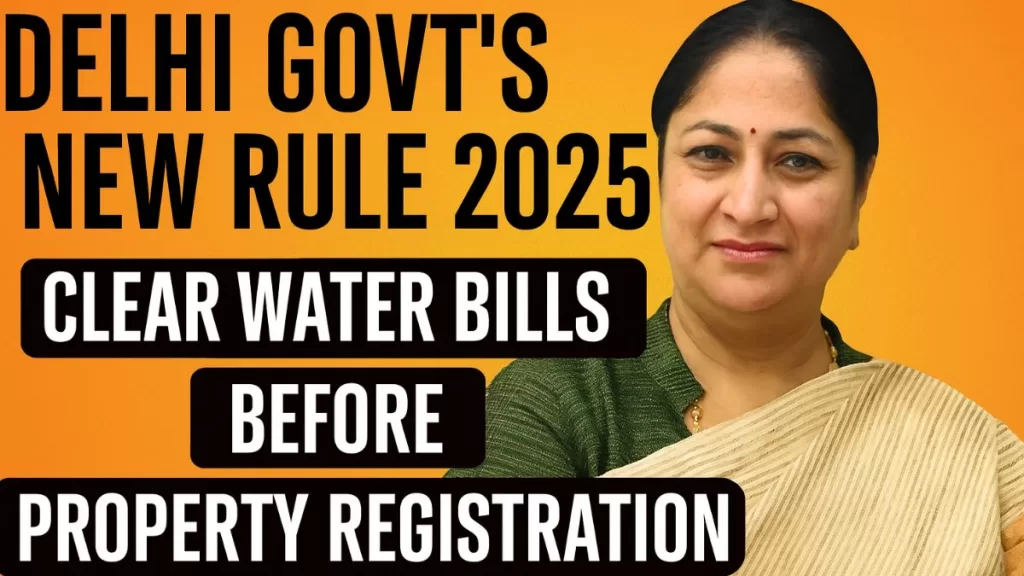
Delhi Govt Property New Rule 2025: The Delhi government is set to introduce a major change in the property registration process, making it mandatory to clear pending water bills before any ownership transfer.
This new policy, approved by Delhi Water Minister Parvesh Verma, aims to curb unpaid water dues, improve revenue collection for the Delhi Jal Board (DJB), and promote transparency in property transactions.
Once implemented, no property registration will be allowed in Delhi unless all outstanding water bills are cleared — a move expected to plug long-standing loopholes in the system.
What the New Rule Says
Under the Property Registration New Rules 2025, any property with pending water bill payments will not be eligible for registration or transfer until the dues are fully settled.
This means buyers and sellers must ensure that:
- All water bills linked to the property are paid in full.
- Any late payment surcharges (LPSC) are cleared.
- The property has a valid no-dues certificate from the DJB before sale or transfer.
A senior Delhi Jal Board official confirmed,
“By linking water bill clearance with property registration, the government is closing a major loophole that allowed unpaid dues to persist indefinitely.”
Why This Rule Is Being Introduced
According to officials, the Delhi Jal Board (DJB) faces a major problem of non-revenue water — nearly 50–52% of treated water does not generate any revenue due to:
- Unpaid bills
- Water theft
- Illegal connections
- Leakage and unbilled usage
The new rule is expected to ensure financial accountability and promote timely bill payments by property owners.
Officials also stated that this policy aligns with DJB’s broader effort to reduce inflated surcharges, recover dues, and encourage regular billing compliance.
Amnesty Scheme to Precede Implementation
The Delhi government plans to roll out the rule after launching an Amnesty Scheme, which will waive 100% of Late Payment Surcharges (LPSC) on water bills.
The Amnesty Scheme is expected to start later this month and continue until March 31, 2026, giving property owners a chance to settle their dues.
It will be implemented in two phases:
- Phase 1: Until January 31, 2026
- Phase 2: From February 1 to March 31, 2026
During this period, residents can clear their pending water bills and obtain a No-Dues Certificate, which will be mandatory for property registration.
Key Highlights of the New Rule
- No Registration Without Clearance: Properties with unpaid water bills cannot be legally registered.
- Mandatory No-Dues Certificate: Proof of payment from DJB will be required at the time of registration.
- Amnesty for Pending Dues: 100% waiver on surcharges before rule enforcement.
- Applicable to All Properties: Both domestic and government establishments must comply.
- Implementation Timeline: Expected after November 2025, post Amnesty rollout.
Why It Matters for Property Owners
This reform will impact all property buyers and sellers in Delhi. Anyone planning to sell, buy, or transfer ownership must first verify that all water-related dues are cleared.
The rule is expected to:
- Prevent accumulation of old dues.
- Bring transparency in property transactions.
- Improve Delhi Jal Board’s financial health.
- Encourage accountability in property ownership.
Experts say the decision will streamline the registration process and discourage people from avoiding payments during sale or transfer.
Outstanding Water Dues in Delhi
According to official data:
- Total Outstanding Amount: ₹16,068 crore
- Late Payment Surcharges (LPSC): ₹11,069 crore
- Principal Amount: ₹4,999 crore
The government hopes that the amnesty + clearance rule will help recover a significant share of this outstanding amount.
Unauthorised Connections Under Watch
Officials also flagged concerns about unauthorised water connections in many areas.
Residents continue using DJB services without formal registration, leading to revenue loss and poor wastewater management.
The new rule will help the DJB track such cases and bring all consumers into the billing system.
What Property Buyers Should Do Now
If you’re planning to buy or sell property in Delhi, take these steps:
- Check Outstanding Bills: Visit the DJB portal (https://djb.gov.in) to check dues.
- Apply for Amnesty: Clear pending dues during the waiver period.
- Obtain No-Dues Certificate: Get an official DJB clearance.
- Verify Before Registration: Submit proof of clearance with property documents.
Failure to do so may result in rejection of registration by the Revenue Department.
Expert View
Real estate experts have welcomed the move. According to a Delhi-based property lawyer:
“This decision will bring accountability and ensure that unpaid water bills don’t get transferred to new buyers. It’s a step toward cleaner property records and transparent ownership.”
However, experts also suggest that public awareness campaigns and grace periods are crucial for smooth implementation.
Conclusion
The Property Registration New Rules 2025 Delhi mark a major shift toward financial discipline and transparency in real estate transactions.
By linking water bill clearance with ownership transfer, the Delhi government ensures that no property changes hands with pending dues.
Residents are advised to clear all outstanding bills during the Amnesty Scheme and obtain the required No-Dues Certificate before initiating registration.
The policy not only strengthens Delhi Jal Board’s revenue base but also sets a new benchmark in urban governance — combining accountability, transparency, and service reform.

I focus on crafting content for national and state government exams, aiming to simplify exam information for aspiring candidates, helping them gain clarity and confidence. With firsthand experience as a former aspirant, I offer a unique perspective in my work. My content covers a range of essential topics such as exam notifications, syllabi, admit cards, and results. You can find more detailed information at: www.sscgovtjobs.com